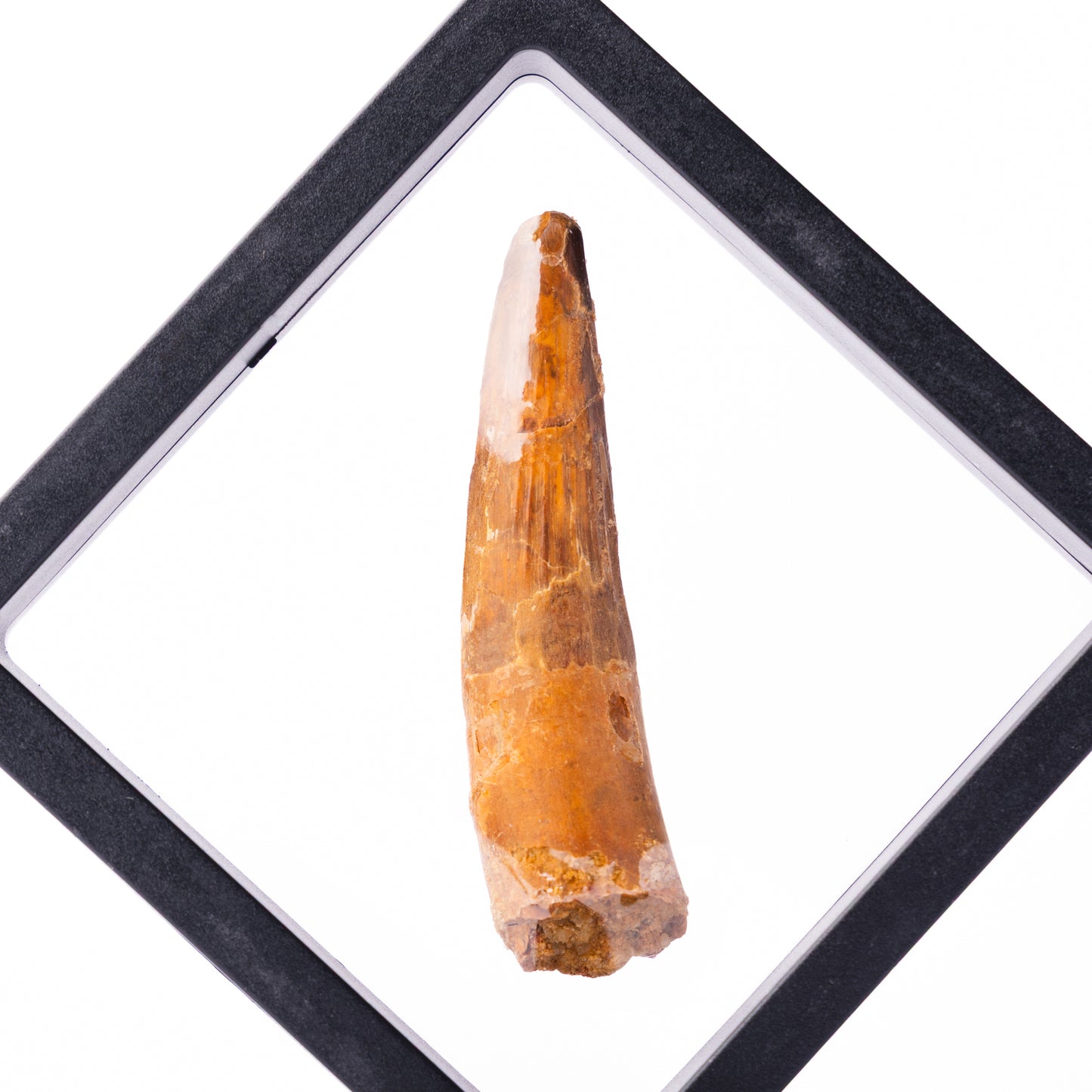


Spinosaurus sp. Tooth - Floating Frame
Spinosaurus sp. Tooth - Floating Frame
Couldn't load pickup availability
Choose your own genuine Spinosaurus tooth fossil, presented in a floating display frame.
Each tooth in this premium collection has been individually photographed, allowing you to select the exact specimen you will receive. They have been chosen for their strong display appeal, with each tooth offering its own combination of shape, colour, enamel texture and natural character.
Spinosaurus was one of the most distinctive predatory dinosaurs of the Cretaceous Period. Its long, narrow jaws contained conical, crocodile-like teeth that were well suited to gripping slippery prey, including fish.
As genuine fossils, every specimen is unique. Natural wear, cracks, mineral deposits and variations in colour are all part of the tooth’s history and character.
Dinosaur
Morocco, North Africa.
Cretaceous, 100 million years old.
The square frame measures 9cm x 9cm - diagonal measurement approximately 12cm.
About This Dinosaur
About This Dinosaur
Spinosaurus is one of the most distinctive meat-eating dinosaurs ever discovered. It lived during the Cretaceous Period, around 100–93 million years ago, and is especially associated with fossil deposits in North Africa, including Morocco and Egypt.
Best known for the tall spines along its back, Spinosaurus had a long, narrow skull, conical teeth, and jaws that were well suited to catching slippery prey. Unlike many other large theropod dinosaurs, its teeth were not heavily serrated like steak knives. Instead, they were more rounded and crocodile-like, making them ideal for gripping fish.
Spinosaurus is particularly fascinating because it appears to have been strongly adapted to life around water. Fossil evidence suggests it may have spent much of its time near rivers, deltas, and coastal environments, feeding on fish as well as other animals when the opportunity arose.
It was also one of the largest known carnivorous dinosaurs, with some estimates placing it at around 14–15 metres long, although exact size estimates are still debated. Its famous sail may have been used for display, species recognition, or possibly temperature regulation.
Today, Spinosaurus remains one of the most popular dinosaurs with collectors and enthusiasts. A Spinosaurus tooth is a striking fossil with a direct link to one of the strangest and most impressive predators of the Cretaceous world.
Share