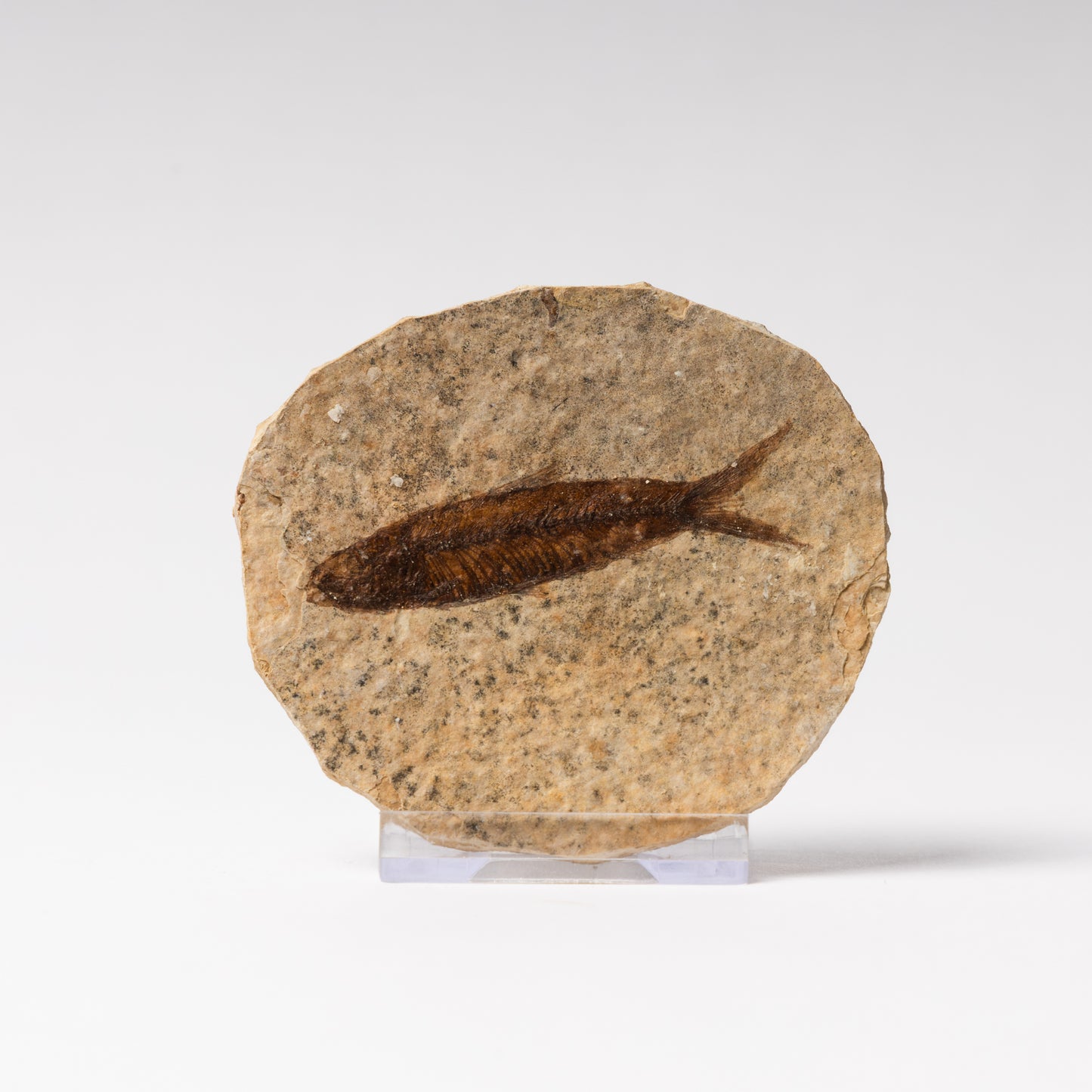

Knightia eocaenea Fossil Fish
Knightia eocaenea Fossil Fish
Couldn't load pickup availability
Fossil Butte Member,
Green River Formation,
Kemmerer, Wyoming, USA
Eocene
55 Million Years Old
Approximately 5cm fish.
More Information
More Information
The Green River Formation is one of the most famous fossil sites in the world, especially known for its beautifully preserved fossil fish. These fossils come from ancient lake deposits in what is now the western United States, particularly Wyoming, Utah, and Colorado.
The formation dates to the Eocene Epoch, around 56–47 million years ago, a time when the region was home to large freshwater lakes surrounded by a warm subtropical environment. Over time, fine layers of sediment settled on the lake beds, helping preserve fish, plants, insects, reptiles, birds, and other traces of ancient life in remarkable detail.
Green River fish fossils are especially popular because many specimens preserve complete skeletons with clear fins, scales, spines, and body outlines. Species commonly found in the formation include Knightia, Diplomystus, Priscacara, Mioplosus, and Phareodus, each offering a different glimpse into this ancient freshwater ecosystem.
These fossils are around 50 million years old, making them far younger than dinosaurs but still incredibly ancient. They represent life in a world recovering and changing after the end-Cretaceous extinction, when mammals, birds, fish, and flowering plants were becoming increasingly important in global ecosystems.
For collectors, Green River Formation fossils are a fantastic choice. They are visually attractive, scientifically interesting, and often display beautifully as natural pieces of prehistoric art. Whether it is a small schooling fish such as Knightia or a larger predator such as Diplomystus or Phareodus, each specimen is a genuine window into an ancient Eocene lake environment.
Share